
About the Budget
- Operating Budget – Day‑to‑day services such as parks, fire services, roads maintenance and administration
- Capital Budget – Investments in infrastructure such as roads, facilities and equipment
How the Budget Is Developed
- Reviewing service needs and priorities
- Aligning with the Town’s strategic goals
- Planning for infrastructure and growth
- Considering financial sustainability and long‑term impacts
How the Budget Supports the Community
- Maintain essential services
- Invest in infrastructure and facilities
- Support community programs
- Plan for future growth and needs
Connection to Taxes
- Service levels
- Infrastructure investment
- Tax rates and financial planning
Realty (property) taxes are levied by the Town. Taxes provide the main source of revenue to deliver services supplied by the Town, the region and school boards located in Halton Hills. Properties are assigned a tax class depending on the use or purpose of each property. Annual tax rates are set and applied to each tax class. The tax levy for property is calculated by using the applicable tax rate and the assessed value assigned to each property. To look up your property tax use the Halton Region Property Tax Estimator. This tool contains property tax information for the current 2016 taxation year. Assessment information for the next assessment cycle 2017-2020 taxation years can be obtained on the MPAC About my Property website.
Important changes
Property owners are encouraged to review important property assessment information and review comparable properties on the MPAC About my Property website. The roll number and access key that is required will be detailed on your property assessment notice. Visit the Understanding Your Property Assessment Notice page for more information about your Property Assessment Notice.
Update your mailing address with MPAC
As a property owner, you will receive notices from MPAC about your property's assessed value. If you own property In Halton Hills but want to receive all your notices at a different mailing address, you can easily update your mailing address online with MPAC.
How will reassessment affect my 2017-2020 taxes?
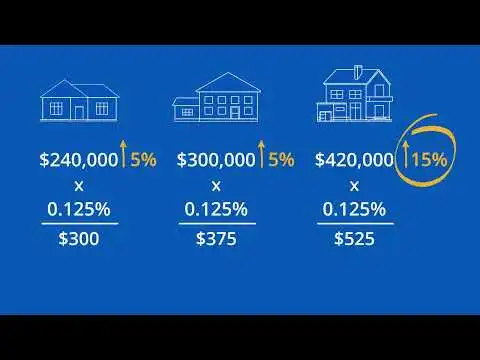
Halton Region has experienced higher market value increases than the province as a whole. Halton Hills' market value increases are approximately 25 per cent. If your assessment has increased by more than 25 per cent you will experience an assessment related increase in your taxes that will be phased-in over the four year period. For example:
2017 (old) market value — $600,000
2020 (new) market value — $850,000
Increase — $250,000
This example represents a 42 per cent increase or 10.5 per cent increase year over year from 2017 to 2020. The town's overall average increase is approximately 25 per cent or 6.3 per cent year over year. If your assessment has increased more than the Town's overall average, you will have a property tax increase due to reassessment. The difference between the average Town increase of 25 per cent and the increase of 42 per cent from the example above is 17 per cent. The 17 per cent difference will be phased-in over the four year period 2017 to 2020, or approximately 4.25 per cent increase per year (excluding any budgetary related changes). Please note that all percentages are estimates.
MPAC has made changes to the deadline for RfR and/or appeal dates. Property owners now have 120 days from the issue date of their property assessment notice to file for an RfR and/or appeal.
| Service | Cost |
|---|---|
| Administration fee for Change of Ownership | $45 per account |
| Arrears Notice fee (on accounts with arrears greater than $125) | $10 per notice |
| Miscellaneous written confirmation of records | $50 per request |
| Summary Statement of Account | $25 |
| Transfer fee (administration fee for adding costs to the tax roll) | $50 per addition |
| Tax Certificate | $65 |
| Tax Certificate - Rush | $75 |
To order a Tax Certificate please forward, by mail a written request along with your payment of $65 (per property) payable to the Town of Halton Hills. Please include the legal description and/or municipal address of each property. The fee for a rush Tax Certificate is $75. If you have any question please contact the Town of Halton Hills Tax Department. For more information please read the Finance Department Fee Schedule or if you have any questions regarding your tax bill, please contact the Town of Halton Hills Tax Department.
| 2018 Capping Factors and options | Commercial | Industrial | Multi-residential |
|---|---|---|---|
Annualized Tax Limit | 10% | 10% | 10% |
Prior Year Tax Limit | 10% | 10% | 10% |
Clawback Percentage Retained | 100% | 100% | 100% |
CVA Threshold for Increasers | $500 | $500 | $500 |
CVA Threshold for Decreasers | $500 | $500 | $500 |
Municipal Levy Change Factor | 0.02466565 | 0.01419555 | 0.02307599 |
Exclude Properties Previously at CVA Tax | Yes | Yes | Yes |
Exclude Properties That Move From Capped to Clawed Back | Yes | Yes | Yes |
Exclude Properties That Move From Clawed Back to Capped | Yes | Yes | Yes |
Notional Rate Urban | 1.754748% | 2.760160% | 1.454412% |
Notional Rate Rural | 1.714617% | 2.695138% | 1.399306% |
Final Tax Rate Urban | 1.798030% | 2.799342% | 1.487974% |
Final Tax Rate Rural | 1.757737% | 2.734057% | 1.432646% |
| 2017 Capping Factors and options | Commercial | Industrial | Multi-residential |
|---|---|---|---|
Annualized Tax Limit | 10% | 10% | 10% |
Prior Year Tax Limit | 10% | 10% | 10% |
Clawback Percentage Retained | 76.2591% | 73.9263% | 100% |
CVA Threshold for Increasers | $500.00 | $500.00 | $500.00 |
CVA Threshold for Decreasers | $500.00 | $500.00 | $500.00 |
Municipal Levy Change Factor | 0.026823 | 0.0158484 | 0.02594164 |
Exclude Properties Previously at CVA Tax | Yes | Yes | Yes |
Exclude Properties That Move From Capped to Clawed Back | Yes | Yes | Yes |
Exclude Properties That Move From Clawed Back to Capped | Yes | Yes | Yes |
Notional Rate Urban | 1.799171% | 2.889250% | 1.495896% |
Notional Rate Rural | 1.756874% | 2.820718% | 1.437816% |
Final Tax Rate Urban | 1.847431% | 2.935040% | 1.534702% |
Final Tax Rate Rural | 1.805152% | 2.866537% | 1.476646% |
There are currently no Tax Sales
Your taxes are calculated by multiplying the assessment value of your property by the tax rate(s). Your tax bill lists the tax class code(s) that apply to your property, the assessed value(s), the tax rate(s) and the final taxes. For a complete listing of all the final tax rates please select from the list below:
Interim tax rates are calculated in one of two different ways. If the Municipal Property Assessment Corporation (MPAC) has undertaken a reassessment then notional tax rates are used. Notional tax rates are designed to smooth out the impacts of any substantial tax changes as a result of the reassessment or any significant changes to a property. In non-reassessment years interim tax rates are equal to 50% of the previous year's tax rates.
Related Information
- Financial Statements – Annual financial results
- Asset Management Planning – Long‑term infrastructure planning
- Strategic Plan – Community priorities and direction